
SEO vs. AEO vs. GEO: How to Make Your Business Visible in AI Search
Learn how SEO, AEO, and GEO work together to improve search visibility, answer-focused content, and discoverability across AI-powered platforms.
SEO vs. AEO vs. GEO: How to Make Your Business Visible in AI Search
Search is changing. People no longer rely only on traditional search engine results to find information, compare services, or make purchasing decisions. They also ask AI-powered platforms for direct answers, recommendations, and summaries.
For businesses, this creates a bigger opportunity: being visible is no longer just about ranking a webpage. It is also about making your content useful, trustworthy, easy to understand, and accessible to search engines and AI systems.
Three important strategies in this evolving search landscape are Search Engine Optimization (SEO), Answer Engine Optimization (AEO), and Generative Engine Optimization (GEO).
Although they have different focuses, these strategies can work together to strengthen your online presence and help potential customers discover your business.
What Is SEO (Search Engine Optimization)?
Search Engine Optimization, or SEO, is the process of improving a website so that search engines can discover, understand, and rank its pages for relevant searches.
Traditional SEO focuses on helping users find your website through organic search results. It combines technical improvements, helpful content, keyword research, website structure, and authority-building activities.
Important SEO practices include:
Keyword research: Understanding what your target audience searches for.
On-page SEO: Optimizing page titles, meta descriptions, headings, content, and internal links.
Technical SEO: Improving crawlability, indexability, mobile usability, and website performance.
Content optimization: Publishing relevant, original content that addresses user needs.
Authority building: Earning relevant, credible backlinks and brand mentions.
For example, a business offering web design services may optimize its website for searches such as “professional web design services” or “website development for small businesses.”
The goal is to make relevant pages easier to find and more useful to potential customers.
What Is AEO (Answer Engine Optimization)?
Answer Engine Optimization, or AEO, focuses on structuring content so that search engines and answer-oriented platforms can identify and present useful answers to users’ questions.
People often search using specific questions, such as:
What does SEO mean?
How much does a professional website cost?
What is the difference between SEO and GEO?
How can a small business improve its online visibility?
Content that directly addresses these questions can improve the chances of being considered for featured snippets, relevant answer experiences, and other question-focused search features. However, placement in these features is never guaranteed.
To improve your AEO approach:
Answer important questions clearly and directly.
Use descriptive headings that reflect real customer questions.
Add relevant FAQs to service pages and blog posts.
Explain technical concepts in simple language.
Use structured data where appropriate and ensure it matches the visible page content.
Keep important information accurate and up to date.
For instance, instead of writing a vague heading such as “Our SEO Expertise,” a business could answer a real customer question with a heading like “How Does SEO Help Small Businesses?”
The key principle of AEO is simple: make the answer easy to find, understand, and verify.
What Is GEO (Generative Engine Optimization)?
Generative Engine Optimization, or GEO, focuses on improving the likelihood that a brand’s useful content may be discovered, understood, referenced, or mentioned in AI-generated responses.
Generative AI tools can synthesize information from different sources to answer questions and recommend potential solutions. Depending on the platform and query, their responses may include links or citations to supporting sources.
GEO helps businesses prepare their content for this changing discovery environment.
Useful GEO practices include:
Publish original insights: Add practical experience, analysis, examples, and information that goes beyond generic summaries.
Demonstrate expertise: Clearly explain your services, methods, and areas of specialization.
Use factual, specific language: Support important claims with reliable evidence and relevant sources.
Build a consistent brand presence: Keep your business name, services, contact details, and company information accurate across relevant platforms.
Create well-organized content: Use meaningful headings, concise explanations, lists, and clear definitions.
Earn credible mentions: Develop relationships and publish genuinely useful information that reputable websites may choose to reference.
For example, a digital marketing agency publishing a detailed, evidence-based guide to local SEO may provide more value than a page filled with repeated keywords and broad marketing claims.
It is important to understand that GEO cannot guarantee AI citations or recommendations. AI platforms use different systems, and their selection processes can change.
SEO vs. AEO vs. GEO: What Is the Difference?
| Strategy | Primary focus | Main objective |
|---|---|---|
| SEO | Search engine visibility | Help relevant pages appear in organic search results |
| AEO | Direct answers to questions | Make information easier to extract and present in answer-focused experiences |
| GEO | AI-generated search and recommendations | Improve the discoverability and usefulness of content for generative AI systems |
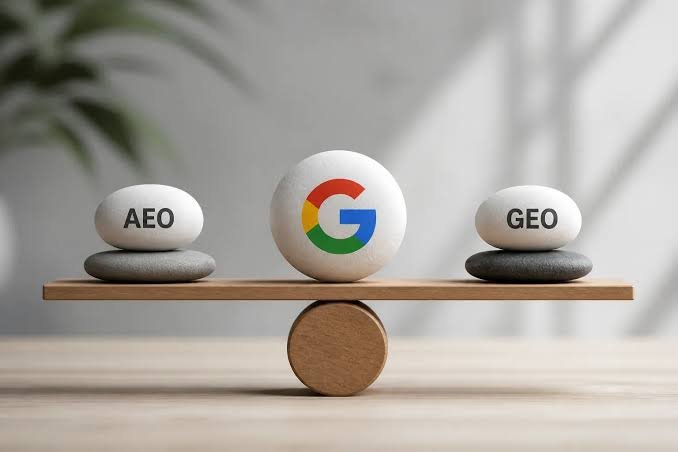
These strategies overlap. High-quality content, a technically accessible website, clear information, and a trustworthy brand can support all three.
Businesses do not necessarily need three separate content strategies. In many cases, an integrated approach is more practical.
How to Optimize Your Website for SEO, AEO, and GEO
1. Understand Search Intent
Before creating content, identify what your audience wants to accomplish.
Some people want information, others compare providers, and some are ready to purchase. Your content should match that intent.
For example, someone searching for “what is technical SEO” needs an educational explanation, while someone searching for “technical SEO agency” may be evaluating service providers.
Create content for different stages of the customer journey rather than targeting keywords without considering their purpose.
2. Create Helpful, People-First Content
Write content that solves genuine problems and answers relevant questions. Avoid publishing multiple pages that repeat the same information without offering additional value.
A useful article should explain its topic thoroughly, use examples where appropriate, and help readers decide what to do next.
Include relevant expertise, original observations, and reliable sources when making factual claims. Content should demonstrate value rather than simply repeat commonly available information.
3. Structure Content for Clarity
A clear page structure benefits both readers and automated systems.
Use one descriptive main heading, logical subheadings, short paragraphs, and lists when they make information easier to understand. Place direct answers near the questions they address, then provide additional context.
Add FAQ sections when they answer real questions your customers have. Do not add unnecessary questions simply to increase page length.
4. Strengthen Technical SEO
Even excellent content can struggle to gain visibility if search engines cannot access or index it properly.
Review your website for broken links, incorrect canonical tags, accidental noindex directives, duplicate pages, slow-loading elements, and mobile usability issues.
Use relevant structured data when supported, such as Organization, Article, Breadcrumb, or appropriate Product markup. Structured data can help search engines interpret content, but it does not guarantee enhanced results or AI visibility.
5. Build Brand Trust and Authority
Trust is an important part of a sustainable search strategy.
Keep your company information consistent, publish accurate service details, show genuine examples of your work, and explain who is responsible for your content when relevant.
Use real customer reviews only with appropriate permission, and never invent testimonials, awards, client results, or professional credentials.
Relevant mentions and links from credible sources can also help people and search systems understand your brand’s reputation.
6. Measure Performance Across Channels
SEO, AEO, and GEO do not share one universal performance metric.
Use Google Search Console to monitor organic impressions, clicks, queries, and search performance. Review analytics data to understand website engagement and conversions.
Where available, monitor referral traffic from AI platforms, brand mentions, and citations in relevant AI search experiences. Some AI visibility measurements may require specialized tools or manual checks, and no single metric provides a complete picture.
Focus on qualified traffic, useful engagement, leads, and business outcomes rather than visibility alone.
Common SEO, AEO, and GEO Mistakes to Avoid
Businesses can waste time and resources by treating optimization as a checklist rather than a process of improving information quality.
Avoid these common mistakes:
Stuffing keywords into headings and paragraphs.
Publishing generic AI-generated content without meaningful review or added value.
Creating FAQs that do not answer genuine customer questions.
Adding structured data that does not match visible content.
Making unsupported claims about rankings, traffic, or AI recommendations.
Assuming that a high traditional search ranking guarantees an AI citation.
Ignoring technical website issues and outdated information.
The most effective strategy is to build a website that serves its audience well while remaining accessible to search engines and other discovery systems.
The Future of Search: One Integrated Strategy
SEO, AEO, and GEO are not competing approaches. They represent overlapping ways of improving how people discover and understand your business across traditional search results, answer-focused experiences, and generative AI platforms.
A strong foundation includes technically sound pages, helpful content, clear answers, credible brand information, and ongoing performance measurement.
As search behavior evolves, businesses that focus on real user needs and reliable information will be better positioned to adapt.
Improve Your Search Visibility with Design Echoes
At Design Echoes, we understand that building an online presence requires more than publishing content or targeting a few keywords. It involves combining technical SEO, strategic content creation, user-focused website design, and a clear understanding of how people search for information.
Our digital marketing and SEO services help businesses identify opportunities to improve their website structure, strengthen their content, and build a more effective online presence.
