
More Than Traffic: How to Turn Online Store Visitors into Customers
Discover practical e-commerce marketing strategies for improving product pages, attracting relevant traffic, reducing checkout friction, and encouraging repeat purchases.
More Than Traffic: How to Turn Online Store Visitors into Customers
Getting people to visit your online store is important, but traffic alone does not guarantee sales. Visitors may browse products, compare prices, add items to their carts, and leave without completing a purchase.
Effective e-commerce marketing focuses on the entire customer journey, from discovering a product to completing an order and returning for another purchase.
By improving product pages, strengthening customer trust, targeting the right audience, and simplifying checkout, businesses can identify opportunities to improve their online store performance.
1. Understand Your Target Customers
Before investing in marketing campaigns, understand who your customers are, what they need, and what influences their buying decisions.
Consider their interests, common questions, preferred platforms, budget, and reasons for choosing one product over another.
Use customer feedback, website analytics, search data, and sales patterns to develop a clearer picture of your audience. These insights can help you create more relevant messaging and select appropriate marketing channels.
2. Create Product Pages That Answer Questions
Product pages play an important role in the buying decision. Customers need enough information to understand what they are purchasing and whether it meets their needs.
Strong product pages typically include:
Clear product titles and detailed descriptions.
High-quality images showing relevant features.
Accurate pricing, sizes, specifications, and availability.
Shipping, delivery, and return information.
Genuine customer reviews, where available.
A clear and easy-to-find add-to-cart button.
Avoid vague descriptions and unsupported claims. Accurate information helps customers make informed decisions and can reduce confusion before and after a purchase.
3. Make Your Store Easy to Use
A confusing shopping experience can prevent customers from completing an order. Ensure your website works well on mobile devices, product categories are easy to navigate, and important information is accessible.
Review the complete purchase journey, including product selection, cart updates, checkout fields, payment options, and order confirmation.
Whenever possible, remove unnecessary steps and make delivery costs and other charges clear before customers reach the final stage.
4. Use SEO to Attract Relevant Traffic
Search engine optimization can help shoppers discover your products when they search for relevant items or solutions.
Start with descriptive product titles, useful category pages, unique product descriptions, optimized images, and logical internal links. Research search terms that reflect the language your customers actually use.
For larger stores, technical considerations such as duplicate URLs, product variations, indexing, and structured data may also require attention.
SEO is a long-term channel. Results depend on competition, product demand, content quality, website health, and other factors.
5. Use Paid Campaigns Strategically
Paid advertising can help you reach potential customers across search engines and social media platforms. However, campaign success depends on more than clicks and impressions.
Define your objective before launching a campaign. You might want to increase product sales, attract qualified visitors, promote a new collection, or reconnect with previous website visitors.
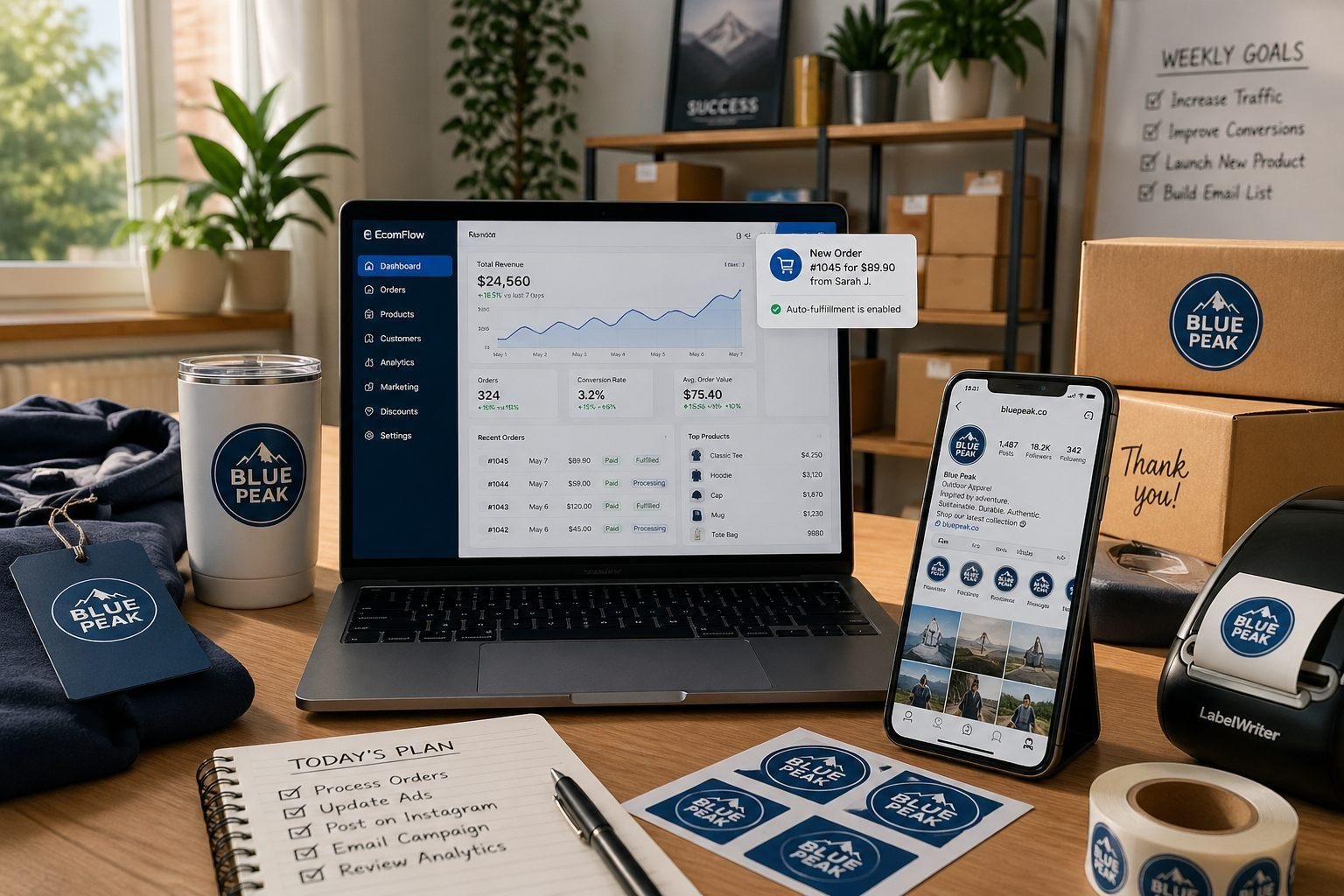
Track metrics such as cost per acquisition, conversion rate, average order value, and return on ad spend. Compare these results with your margins and operating costs to understand whether your campaigns are commercially sustainable.
6. Recover Abandoned Carts Thoughtfully
Some shoppers add products to their carts but leave before purchasing. Reasons may include unexpected delivery costs, complicated checkout forms, limited payment options, or simply needing more time to decide.
Start by identifying where customers abandon the checkout process. Improve the experience where possible, then consider permission-based reminder emails or retargeting campaigns.
Keep reminders useful and respectful, and make sure your communications follow applicable privacy and marketing requirements.
7. Build Relationships After the First Purchase
E-commerce marketing should not end when a customer places an order. Helpful post-purchase communication can improve the customer experience and encourage repeat business.
Consider order updates, useful product guidance, customer support, feedback requests, and relevant recommendations. Loyalty programs and special offers may also be appropriate for your audience and business model.
The goal is to build a positive customer relationship rather than send unnecessary promotional messages.
8. Measure What Actually Matters
Use your analytics tools to understand how visitors interact with your store and where improvements may be needed.
Monitor metrics such as:
Conversion rate.
Revenue and average order value.
Customer acquisition cost.
Cart and checkout abandonment.
Repeat purchase rate.
Revenue and profitability by marketing channel.
Look for trends over time and test changes carefully. A rise in website traffic is useful only when it contributes to your broader business objectives.
Grow Your Online Store with Design Echoes
Successful e-commerce marketing combines a useful shopping experience with relevant traffic, persuasive product information, thoughtful campaigns, and ongoing performance analysis.
At Design Echoes, we help businesses bring together creative design, digital marketing, and e-commerce-focused strategies to strengthen their online presence and support sustainable growth.
